Chapter 01
Getting Started
The half marathon is the most underrated race distance in running. Everyone talks about the marathon, but 13.1 miles is the sweet spot. Long enough to be a real race, short enough to fit into a real life. Here's what you need to know before you start.
Yes! That's the short answer. But let me explain WHY I think it's the perfect distance for many runners.
First of all, the training won't take over your life. It's challenging, but it fits into the average person's week. You can train for a half marathon and still have a life outside of running.
It's the perfect distance. Not so short you're sprinting from the start, not so long the pain cave lasts forever. You have time to warm up, find your rhythm, and actually race.
Also, you can combine it with a great trip. Recovery from a half marathon is quick enough that you can enjoy the city you travelled to. The race and the trip coexist beautifully. And there are so many incredible half marathons around the world you could race. That doesn't mean you have to go far though, you may find an incredible race just an hour's drive away from your front door!
Last but not least, half marathon training can be incredible for your health. Done right, half marathon training builds a sustainable rhythm that works alongside strength training, your work, and your social life. Marathon training can be quite intensive and require too much time. Half marathon training is much more balanced.
Already have a running base? Ideally you can comfortably run a 10K before you start. From there, 12 to 20 weeks is the right window. 16 weeks is the sweet spot, long enough to build properly and focused enough to stay sharp.
New to running? Give yourself at least 20 weeks. Your goal at this point should be to finish, and there is nothing wrong with that. Just make sure your training still has direction.
Complete beginner? Train for a 10K first. Jumping from zero to 21K in a short time is one of the most common ways runners get injured before they even reach the start line.
Running five times a week at whatever pace feels good is not a training plan. It puts you in the grey zone, always a bit tired, never really improving, and you'll end up wondering why the race didn't go so well.
A training plan gives your body the structure it needs to adapt safely. It tells you when to push, when to hold back, when to rest, and how to build your mileage without doing too much too soon. Whether you use a free plan, an app, or work with a coach, you need something to follow.
Most runners pick one finish time and make it their entire focus. Then race day is hot, or windy, or busier than expected, and they miss the time. And they feel like they failed.
I believe there's a better way to set goals. In fact, with the athletes I coach I set three types of goals:
Outcome goal: the time on the clock. This is the number most runners obsess over. And yes, it matters. I'm not saying you shouldn't have one. But rather than fixating on one specific time, set three versions:
- A goal: your target if everything goes to plan and conditions are ideal
- B goal: a time you'd be proud of if something goes sideways, bad weather, a tough course, an off day
- C goal: the floor, the thing you achieve no matter what. Especially for first-timers, I recommend your C-goal to be "crossing the finish line". For more advanced runners, it should be a time you know you can run even if conditions are rough.
Your time goal should be based on your current fitness, not where you hope to be, not what your training partner is running, not what looks good on Strava. Your goal should be yours. It should excite you without scaring you, and it should stretch you without being unrealistic. This way you always have a time goal you can aim for.
Performance goal: how you run the race. These are the things within your control, regardless of what the conditions are. Your pacing strategy. Fuelling every 20 to 30 minutes. Hydrating at every aid station. Staying calm in the first few kilometres. Pushing in the final two. Performance goals can be achieved even on a bad day. In my opinion, these are much more important than the time on the clock.
Process goal: what you do in training. Try to set some goals for this period too. For example, doing your long run every week. Getting some strength sessions done. Prioritizing your sleep, and fuelling well before, during and after your runs. Your process goals are the building blocks that make everything else possible. They are almost entirely within your control. And hitting these goals should be celebrated, too. (Pizza after long run Sunday, yes please)
When you set goals across all three areas, you give yourself a much better chance of feeling successful, not just on race day, but throughout the whole training block.
Chapter 02
Gear
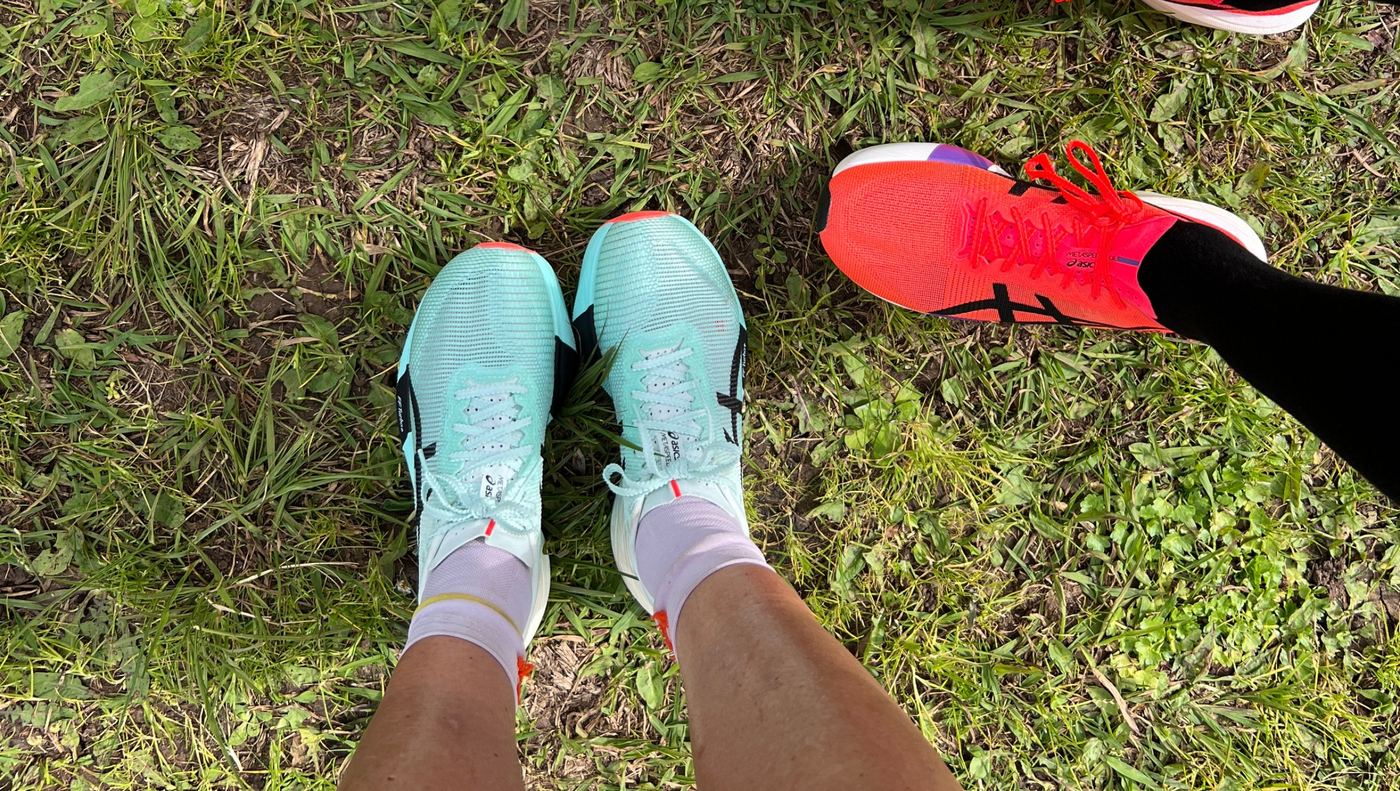
Most runners overcomplicate this. You don't need to spend a fortune. No $500 GPS watch, no seven pairs of shoes, no complete wardrobe overhaul. There are only a handful of things that actually matter, and the rest is optional.
Go to a running store, get your gait assessed, and buy the shoe that's right for you, not the one your friend runs in or what has the best reviews online. 13.1 miles is a lot to ask of an old pair of trainers. Bear in mind that store gait assessments are typically a visual check of how your foot lands: a useful starting point, not a definitive biomechanical verdict. The goal is to find a shoe that feels comfortable and supportive for you specifically.
Ideally, you'd have two pairs. Rotating them extends the life of both, since foam cushioning needs 24 to 48 hours to fully decompress between runs. A second pair also means you have a well broken-in race-day shoe that hasn't been worn down by your full training block. But for your first half marathon, one good all-rounder is completely fine. Don't over-invest before you know what you need.
You don't need a new wardrobe. But two things make a real difference:
Shorts with pockets. On your long runs, it's wise to bring your phone, some fuel, maybe a soft flask. Shorts with proper pockets mean nothing bounces and everything is within reach. And the best ones even help you to avoid any chafing.
Running socks. This one gets overlooked constantly. The wrong socks cause friction, trap moisture, and give you blisters. Good running socks are designed specifically to prevent this. A small investment that makes a real difference.
Everything else in your wardrobe is probably fine. If you feel like you're missing something, buy quality straight away. I speak from experience when I say cheap kit tends to cost more in the long run.
You can train for and race a half marathon without a watch. But once you start doing tempo runs and interval sessions, trying to hit specific paces by feel or by constantly checking your phone is hard and annoying.
A watch guides you through the session, shows your pace, and keeps you in the right heart rate zone. You don't need the most expensive one. A solid mid-range GPS watch has everything you need.
Fuel and electrolytes are not optional extras. They are part of your kit. Buy different types, gels, bars, chews, whatever you want to try, and test them on your long runs. Race day is not the time to find out how your stomach reacts.
Everything else, headphones, a running cap, a hydration vest, a waistband, is optional. Start with the basics and build from there.
Chapter 03
Training
Training for a half marathon is simple in structure. The hard part is doing it consistently, week after week, without breaking down. Here's how to build a training block that actually works.
3 days
1 easy run
1 long run
1 quality session
+ 1 day cross training
4 days — recommended
2 easy runs
1 quality session
1 long run
5 days
2 easy + 2 quality + 1 long
or
3 easy + 1 quality + 1 long
Don't rush into two quality sessions per week. Your bones, tendons and ligaments need time to handle the load. For most runners, starting with one quality session and building from there is the smarter move.
Two sessions a week is the target. Key areas: core, glutes, hips, calves, knees and ankles. Start with bodyweight, about 30 minutes per session, and build a foundation before adding weight.
When to do it: the best time is on the same day as an easy run: strength in the morning, run in the evening. This keeps your rest days as true rest days.
- 3 running days: do strength on 2 non-running days
- 4 or 5 running days: do strength on the same days as easy runs
- Whatever your schedule: avoid pairing strength with your quality sessions. Save those combinations for easy-run days. If you must do both on the same day, aim for at least 6 to 8 hours between them
Small things add up too. Calf raises while you brush your teeth. A few squats while the coffee brews. Walking on your heels or toes while on the phone. Not a replacement for proper strength work, but they help.
Mobility is your ability to actively control movement through a joint's full range, and for runners, the hips and ankles are where it breaks down fastest. Mobility work is distinct from static stretching (which is passive and best saved for post-run). Think hip openers, ankle circles, hip flexor work at end range. Two 10-minute sessions a week is all it takes to start seeing a difference.
3 weeks of building, 1 week of reduced load. Then repeat. Be flexible. If you need to swap a rest week with a build week, do it. Work backwards from your race date. The week before the race is your taper.
Mileage progression example:
- Week 1: 20 miles
- Week 2: 22 miles
- Week 3: 24 miles
- Week 4: 14 miles (rest week)
- Week 5: 22 miles, not 24. Never jump back to your highest number after a rest week.
The exact numbers are personal. What matters is the principle: build gradually, rest deliberately.
Chapter 04
Nutrition
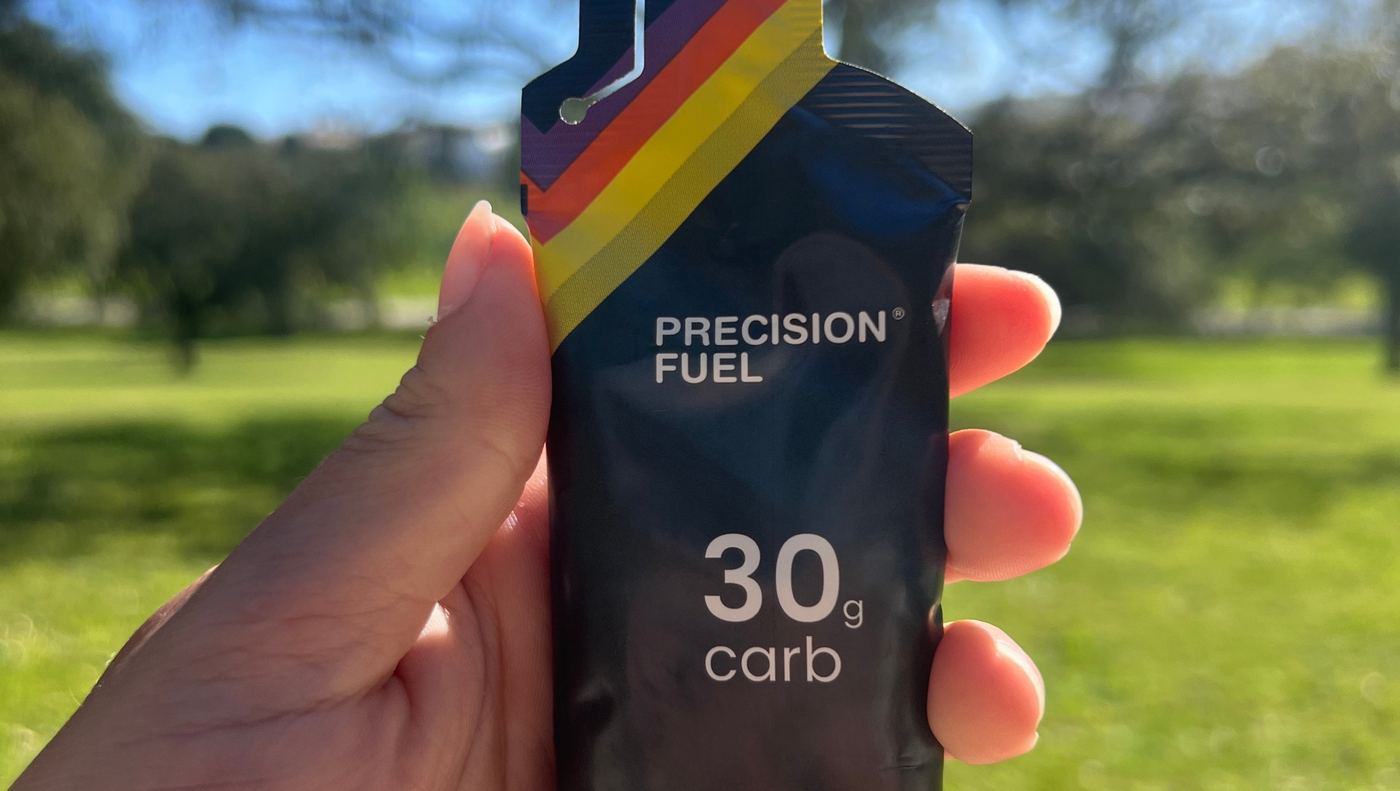
Most half marathon runners are underfuelling. And most of them don't even know it. This chapter is about fixing that, before it costs you on race day.
You've probably heard it: only fuel if your run lasts longer than 90 minutes. For an easy run, that has some truth for some people. But a half marathon is not an easy run. You are pushing hard for the entire duration.
Think of your fuel stores as a bonfire. You don't want that fire to run low. You want it burning steadily throughout the race. Add wood consistently. Don't wait until it's nearly dead and then scramble to get it going again. Your body works exactly the same way.
Keep your fuel stores topped up and your performance stays consistent. Let them drop and you will feel it around mile 9 or 10 in a way that is very hard to reverse.
Your gut needs to be trained to absorb carbohydrates while running at effort. If you've never done it before, race day is not the time to find out how your stomach reacts.
Start fuelling on your long runs from week one. Use the same products you plan to race with. Bonus: fuelling your training runs speeds up recovery. Your gut will adapt, and by race day it will be ready.
How much: aim for 30 to 60 grams of carbohydrates per hour as a starting point, building toward 60 to 90 grams over the course of your training block. Your gut needs training just like your legs do. Start lower and increase gradually. Once you're taking in more than 60g per hour, make sure some of those carbs contain fructose. Your body can only process around 60g of glucose per hour, but fructose uses a different transporter. Look for a roughly 2:1 ratio of glucose or maltodextrin to fructose on the label — most modern race gels are already formulated this way.
How often: every 20 to 30 minutes based on time, not distance. Set a timer on your watch, because it is easy to miss a fuelling window during a race.
What to take: anything your gut tolerates. Some rough carbohydrate references:
| Food | Approx. carbs |
|---|---|
| 3 average-sized dates | ~20g |
| 1 medium banana | ~27g |
| 13 Haribo gold bears | ~23g |
| 1 applesauce pouch | ~17g |
Normal shop-bought sweets work fine too, just harder to swallow when running fast. Whatever you choose, practise with it in training first.
Electrolytes are not just for preventing cramps. Research shows cramps during racing are usually caused by going out too fast, not low electrolyte levels. So why do they matter?
Sodium keeps your blood plasma volume up. When you sweat and lose sodium, your body struggles to retain the fluids you're drinking. This reduces blood plasma volume, which means your heart has to beat more often to deliver the same oxygen. At race effort, in the heat, this compounds fast.
Sodium helps your gut absorb carbs. Sodium and glucose share the same transporter in the gut wall. If your sodium levels are low, carbohydrate absorption slows, which is the last thing you want mid-race.
How much sodium do you need?
Salt rings on your clothing are not a reliable indicator of how salty your sweat is. Everyone gets those.
The day and night before: start carb loading 36 to 48 hours before the race. Don't change how much you eat overall. Just swap protein, fat and fibre for more carbohydrates. Good options: pizza without too much cheese, pasta with tomato sauce or pesto, white rice with a simple sauce. Keep it familiar, nothing new.
Race morning: eat what you have been training with. No experiments. Personal favourites: oatmeal with banana and honey, or white rice with salt and maple syrup. About 15 to 20 minutes before the start, have a banana or a carb bar.
Post-race: water and sodium first. Sodium helps your body retain the fluids you're taking in. Then carbs and protein together. Chocolate milk is near-perfect. Hold off on fat for now, it slows carbohydrate absorption.
Keep refuelling for 24 to 48 hours after the race, not just the first 30 minutes. And if you want a post-race beer, hold off until dinner at the earliest. Alcohol has a significantly stronger effect on a post-race body than under normal conditions.
Chapter 05
Race Week & Race Day
You've done the work. This week is about arriving at the start line ready, not squeezing in one last effort.
The most common taper mistake is pulling back too much: cutting sessions, removing all intensity, barely running at all. This leaves your legs heavy and your head full of doubt.
Keep roughly the same number of running days, just significantly less mileage. A short hit of speed two to three days before the race is actually helpful. If your race is Sunday, Thursday works well. Instead of your normal 8K speed session, do 2K of it. Just enough to remind your legs what fast feels like without taking anything out of them.
The closer you get to race day, the less you do. But do not stop completely.
The night before, lay out your full race kit: shoes, kit, watch, fuel, everything. This one habit removes almost all race morning stress.
Visualisation: a few days before the race, try a race visualisation. Walk yourself through the race in your head, almost like a guided meditation. Visualise your ideal race, but also visualise some adversity: warm weather, a busy course, your stomach feeling off. Imagine dealing with it. Your final visualisation should always be your ideal race. Go in with a positive picture in your mind.
Mantras: have two or three ready. Things you can repeat when it gets hard. "Your race, your pace." "Keep moving forward." "Run your best." Some runners write these on their wrists. It sounds small, but it works.
On writing splits on your arm: I'd steer away from this. If the first split goes slightly wrong, it can unravel your whole race mentally. Instead, go back to your A, B and C goals and your performance goals.
The mindset I have found works best: go into the race thinking "I will just do the best I can today." It takes the pressure off and lets you run freely.
At the start line, soak up the energy. Every single person there is running with some kind of goal. You all share the same start line and the same finish line. That is something special. Smile.
Pacing. The most common race day mistake is going out too fast, carried away by the crowd and the adrenaline. Stick to your plan. Aim for a negative split, meaning running the second half of the race slightly faster than the first. Hold a steady, controlled pace early and let yourself open up later.
Smiling. When you feel like you are struggling, force a smile. It sends a signal to your brain that helps. Try it.
The crowd. Give high fives. Soak up the noise. More fun equals a better you equals a better race.
The pain cave. At some point you may find yourself on the edge of it. That moment where your head starts saying "this is hard, you can't hold this pace." When that happens, do the opposite. Shout back: "No, this is fine. I feel great, I am doing so well. I will keep running no matter if the pace drops." You are in control of your mental game more than it feels like in that moment. And even if you don't fully get it under control, the act of pushing back is strong mental training for your next race.
If a light massage is on offer at the finish line, take it. It helps circulation and eases acute soreness. But hold off on deep tissue work for at least 48 to 72 hours. Your muscle fibres are already under stress from the race, and deep pressure too soon can do more harm than good. Walk around, get the blood moving gently, keep hydrating.
Give yourself at least two full weeks of recovery before thinking about the next training block. Your body has not just been through a race. It has been through a full 16-week build. Now is the time to let it absorb all of that work.
Chapter 06
What's Next
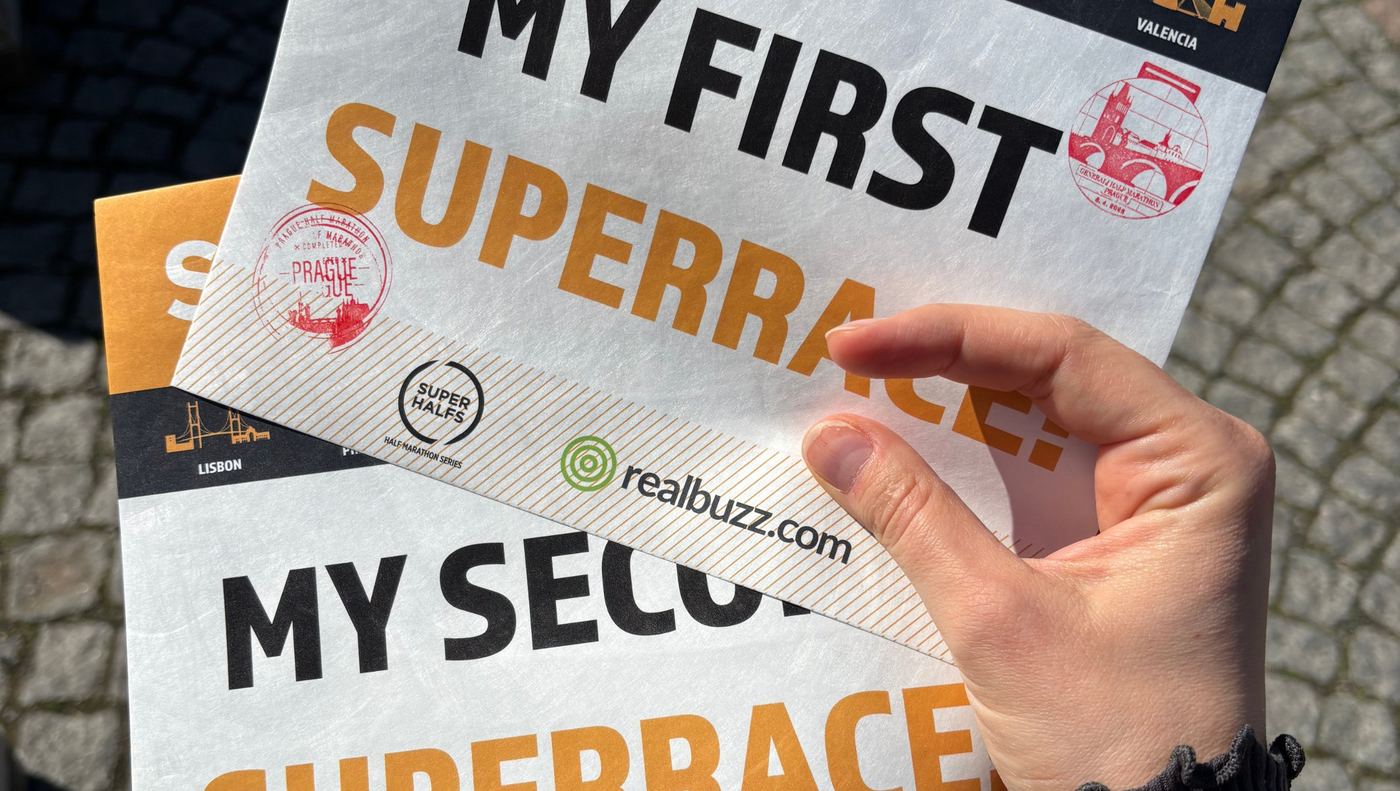
You just finished a half marathon. Before you do anything else, sit with it.
One of the most common mistakes runners make after a race is immediately looking for the next one. The finish line adrenaline is real. If the race went badly, you want another shot. If it went well, you feel like you could do even better. Both impulses make complete sense.
But it is worth sitting with the race for a little while first. Reflect on what went well and what you could do differently. Celebrate the milestone. You finished a half marathon. That is the result of a whole training block, weeks of early mornings and long runs and sessions you didn't feel like doing. Wear the medal. Go for a nice dinner. Have that brunch. You earned it.
Not every race goes well. And honestly, that is part of what makes running meaningful. The fear of not hitting a goal is what makes hitting it so special. The lows are what make the highs feel like highs.
Be angry for a bit. Be disappointed. Then, once that settles, reflect.
Things in your control: going out too fast, underfuelling, not hydrating enough, starting in the wrong wave. These are lessons. Take them into the next block.
Things partly in your control: the weather. You cannot control conditions, but you can control how you respond. This is why having A, B and C goals matters, so that no matter what race day looks like, you always have something worth running for.
Things not in your control: race logistics, delays, things the organisers got wrong. Sometimes things don't go to plan. Find the lesson where there is one, let go of what there is not, and carry both forward.
Before deciding what's next, ask yourself some honest questions. Did you enjoy the training block? Did it fit into your life, or did you have to cancel things regularly to get the sessions done?
- Training felt heavy and time-consuming: a 10K might be a better next goal. More manageable, still deeply satisfying.
- Training felt just right: consider going for a faster half. Same distance, more focused training, a clear performance goal.
- You loved the training and could do more: a faster half, a full marathon, or even trail running, a half marathon trail race, a longer trail race, or something in between.
Also think about where. There are extraordinary races all over the world. If another half marathon is on the cards, you already have so many to choose from. There is no right answer. The right next goal is the one that excites you, fits your life, and makes you want to lace up tomorrow morning.
That's it for the RunLetters Half Marathon Guide.
I hope this was helpful to you!
Ready to stop training alone? The RunLetters Half Marathon coaching program is built for runners who want to show up on race day feeling excited and prepared, ready to run their best race ever.
Learn more here →